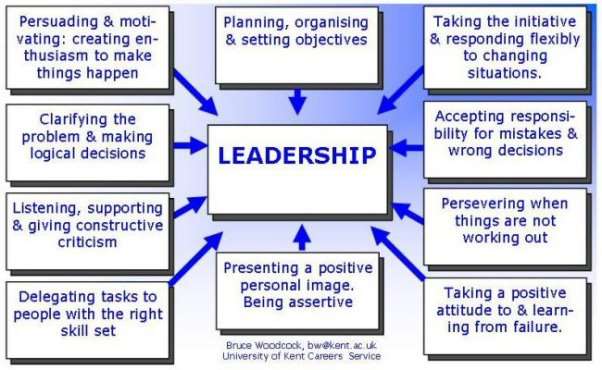
4.1 Explanation of theories of leadership that apply to the Health and Social Care workplace.
Students of health and social care management will find that leadership theory has undergone considerable revision in recent decades, moving away from trait-based and command-and-control models toward relational and distributed frameworks that better capture the collaborative, emotionally demanding nature of person-centred care delivery. There are four key theories of leadership that have recently replaced the traditional hierarchical-based leadership seen within the NHS. These four key domains of leadership are relational, personal, contextual and technical all of which can be applied to the nursing home setting. Relational leadership promotes organisational and individual change, encourages engagement and communication between staff and patients and focuses on the dynamics of working relationships and patient experiences. In nursing home settings specifically, relational leadership has been associated with lower staff turnover, higher resident satisfaction scores, and improved care quality ratings, suggesting that interpersonal skill development in care leaders may produce measurable service outcomes (West et al., 2020). The personal leadership theory includes the promotion of reflective learning, personal resilience and self-awareness as a leader. Contextual leadership utilises policy and strategy within the healthcare field to promote development by understanding the positions and strengths of various stakeholders and/or employees. Technical leadership involves the improvement of methodologies, approaches and philosophies within the working environment. This theory adopts the position of the leader changing things for the better while a manager maintains existing systems in good working orders.
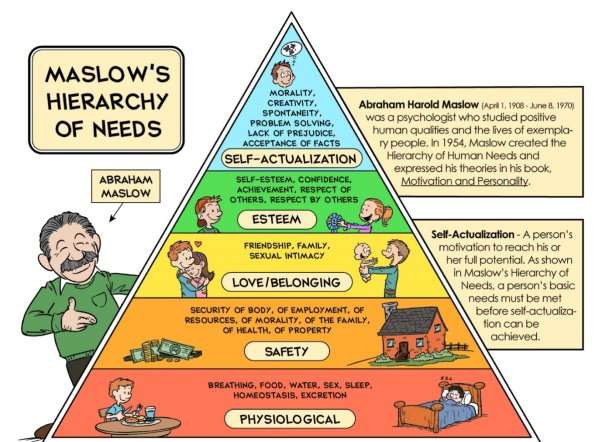
Definition[2CR2] of management: Management takes place within a structured organisational setting with prescribed roles. It is directed towards the achievement of aims and objectives through influencing the efforts of others.
Classical management theory
- Emphasis on structure
- Prescriptive about ‘what is good for the firm’
- Practical manager (except Weber, sociologist)
Henri Fayol (1841 – 1925), France
|
1.Division of work |
Reduces the span of attention or effort for any one person or group. Develops practice and familiarity |
|
2. Authority |
The right to give an order. Should not be considered without reference to responsibility |
|
3. Discipline |
Outward marks of respect in accordance with formal or informal agreements between firm and its employees |
|
4. Unity of command |
Oneman superior |
|
5. Unity of direction |
One head and one plan for a group of activities with the same objective |
|
6. Subordination of individual interests to the general interest |
The interests of one individual or one group should not prevail over the general good. This is a difficult area of management |
|
7. Remuneration Writing a Similar Assignment? Get a Scholar-Written Paper Matched to Your BriefEvery order is handled by a degree-holding expert in your subject — written to your exact rubric, fully original, and delivered ahead of your deadline. Start My Order |
Pay should be fair to both the employee and the firm |
|
8. Centralisation |
Is always present to a greater or less extent, depending on the size of the company and quality of its managers |
|
9. Scalar chain |
The line of authority from top to bottom of the organisation |
|
10. Order |
A place for everything and everything in its place; the right man in the right place |
|
11. Equity |
A combination of kindliness and justice towards the employees |
|
12. Stability of tenure of personnel |
Employees need to be given time to settle into their jobs, even though this may be a lengthy period in the case of the managers |
|
13. Initiative |
Within the limits of authority and discipline, all levels of staff should be encouraged to show initiative |
|
14. Esprit de corps |
Harmony is a great strength to an organisation; teamwork should be encouraged |
Advantages
- Fayol was the first person to actually give a definition of management which is generally familiar today namely ‘forecast and plan, to organise, to command, to co-ordinate and to control’.
- Fayol also gave much of the basic terminology and concepts, which would be elaborated upon by future researchers, such as division of labour, scalar chain, unity of command and centralization.
Disadvantages
- Fayol was describing the structure of formal organizations.
- Absence of attention to issues such as individual versus general interest, remuneration and equity suggest that Fayol saw the employer as paternalistic and by definition working in the employee’s interest.
- Fayol does mention the issues relating to the sensitivity of a patient’s needs, such as initiative and ‘esprit de corps’, he saw them as issues in the context of rational organisational structure and not in terms of adapting structures and changing people’s behaviour to achieve the best fit between the organisation and its customers.
- Many of these principles have been absorbed into modern day organisations, but they were not designed to cope with conditions of rapid change and issues of employee participation in the decision making process of organisations, such as are current today in the early 21st century.
4.2 Analyse how working relationships may be managed.
The most effective way of managing working relationships is by trusting your employees to carry out their role to a high standard. For managers in health and social care, psychological safety — the shared belief that team members can raise concerns, admit mistakes, or suggest improvements without fear of reprisal — has emerged in the literature as a precondition for effective teamwork and a significant predictor of patient safety outcomes (West et al., 2020). In addition, an effective leader should always respect their workforce, be honest, considerate and value their employees’ opinions and values (Williams, 2007). They should promote a culture of openness within their team and strive to understand the different backgrounds and perspectives of the team members. There should also be a great focus on communication both within the team and between the manager and team members (Barrick et al, 2007). This focus should be on utilising the most effective form of communication in each specific scenario. For example, when discussing weaknesses, a private meeting would be appropriate whilst for team targets, team meetings or group emails would be more effective. In addition, body language, listening skills, ability to maintain eye contact and attentiveness are all effective ways to develop and maintain a working relationship.
The way of influencing individuals and teams by task allocation
Stuck on Your Assignment?
Cola Papers Experts Are Ready Right Now
Join thousands of students who submit confidently. Human-written, plagiarism-checked, and formatted to your institution's exact standards.
According to Dowding and Barr (1999), task allocation influences both individual and team performance. In contemporary health and social care settings, skill-mix decisions — determining which tasks are allocated to registered nurses, healthcare assistants, or allied health professionals — are increasingly evidence-informed, drawing on workforce productivity data and competency frameworks rather than tradition or budget convenience alone. This is obvious when considering the role and skill set of each individual within the workplace. When considering a nursing home environment, a simplified task list may be used for the doctor to examine and diagnose the patient, the nurse to provide the correct medication and for the carer to feed or bathe the patient. As such, these tasks are allocated in accordance with the skill and expertise of the individual. Where tasks are not allocated effectively within the team and do not match the skill set of the individual, performance of both the individual and the team will obviously be impaired (Stewart and Barrick, 2000). However, if tasks are allocated effectively, team and individual performance will be enhanced.
4.3 Evaluate[2CR4] how own development has been influenced by management approaches encountered in own experience.
As a HR Manager for Smart Care Residential home my own development has been influenced through a number of leadership and management approaches. Firstly, through the use of personal performance appraisals, I have been encouraged to focus on areas of weakness as well as my strengths. By highlighting these weaknesses, I have then been able to concentrate on relevant training; the gathering of information through self-directed reading, to improve my knowledge in these weak areas. Team-working has been improved through the promotion of working relationships between team members, through the use of team-building sessions and activity workshops. In addition, whilst it is acknowledged that everyone has a poor manager at some point in their career, these poor managers accentuate the skills of the effective leadership and have helped me to develop good leadership skills. I have also been allowed to mentor new employees as I was very effective in my role. However, I consider the most effective management approach for me, to have been through the use of task allocation and team target setting. Whilst I originally assumed that the task allocation was for an individual’s benefit, I can now see how this benefits the whole[2CR5] team.
Management approaches
- Leadership style
- Motivation
- Mentoring
- Coaching
- Training
- Shadowing
- Task orientation
- Team orientation
- Individual orientation
Own development
Attributes
- Confidence
- Skill competency
- Knowledge
- Understanding
The transition from traditional hierarchical management to distributed and compassionate leadership models in health and social care reflects a wider recognition that staff wellbeing is inseparable from care quality and patient safety. Research commissioned by NHS England found that organisations scoring in the top quartile for staff engagement consistently produced better clinical outcomes, lower patient mortality rates, and stronger financial performance than those scoring in the bottom quartile — a finding that suggests investment in leadership development is not simply a welfare concern but a strategic service quality imperative (West et al., 2020). For managers at all levels, Maslow’s Hierarchy of Needs remains a useful conceptual scaffold for assessing whether basic safety, esteem, and belonging needs are being met within care teams before expecting staff to operate at the self-actualisation levels that genuine patient-centred excellence requires. Task clarity, fair workload distribution, and psychological safety are the operational prerequisites for the kind of reflective, person-centred practice that modern health and social care frameworks demand.
References
Donnelly, P., & Kirk, P. (2021). Use the PDSA model for effective change management. Education for Primary Care, 26(4), 279–281. https://doi.org/10.1080/14739879.2021.1936661
West, M., Armit, K., Loewenthal, L., Eckert, R., West, T., & Lee, A. (2020). Leadership and leadership development in health care: The evidence base. Faculty of Medical Leadership and Management. https://www.fmlm.ac.uk/resources/leadership-and-leadership-development-in-health-care-the-evidence-base
Timmins, F., & Duffy, A. (2018). Writing your nursing portfolio: A step-by-step guide. Open University Press.
Reference
Urwick, L.F. (1968), “Great Names in Management: Henri Fayol, 1841â€1925”, lecture presented at the University of New South Wales, 19 June, Urwick papers, Henley Management College, ref. 3/5, unpublished.
http://www.emeraldinsight.com/doi/ref/10.1108/00251740510634895
[2CR1]Explain the eight (8) leadership theories, such great man, trait, etc.
[2CR2]Maslow may be good on working relationship or management approaches
[2CR3]Review working relationship and analyse (break down and show relationship between each topic and the improved working relationship
[2CR4]Answer this question in three parts (1) identify the management approaches (2) reflect on what your learn from management approaches (3) conclude how you can use your experience and skills acquired to manage other people
[2CR5]How did these approaches make you a better manager to manage other people in future
Our Key Guarantees
- ✓ 100% Plagiarism-Free
- ✓ On-Time Delivery
- ✓ Student-Friendly Pricing
- ✓ Human-Written Papers
- ✓ Free Revisions (14 days)
- ✓ 24/7 Live Support